
Corporate Supply Chain Resilience
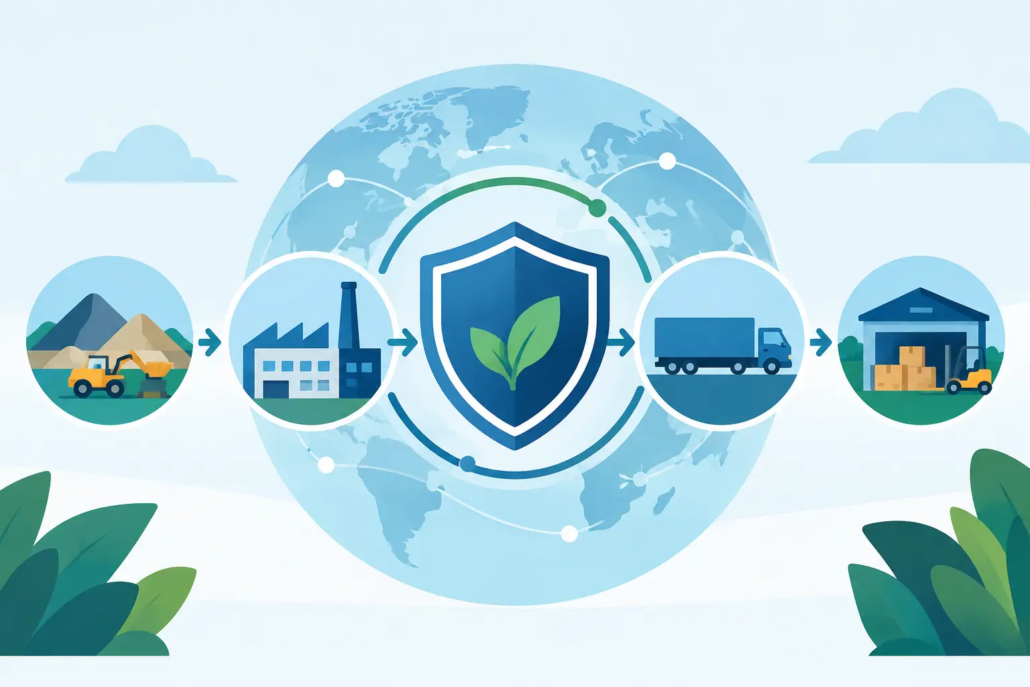
A missing component, a supplier disrupted by a cyber incident, a customs shutdown, or the sudden unavailability of a logistics hub can halt production long before the problem surfaces in internal systems. Supply chain resilience, therefore, is not merely the ability to source from alternative suppliers; it is the organization’s ability to maintain or restore acceptable service levels when a critical dependency fails.
For industrial companies, logistics providers, regulated firms, and insurers, this issue calls for a shift in perspective. The supply chain is not a linear sequence of suppliers, contracts, and shipments. It is a network of operational, digital, financial, and geographical interdependencies that can amplify a local incident to the point of causing production stoppages, missed deliveries, lost revenue, or contractual disputes.
Why Supply Chain Resilience Is a Governance Issue
An effective program starts with governance, not with a list of alternative suppliers. The board of directors and management must be able to understand which products, sites, technologies, and third parties support essential operations, what level of disruption is tolerable, and who has the authority to decide on extraordinary measures in the event of a crisis.
This approach integrates procurement, operations, quality, IT, security, finance, legal, business continuity, and risk management. If each function assesses risk using different criteria, the organization ends up with a lot of data but few actionable decisions. If, on the other hand, common criticality thresholds, maximum downtime limits, responsibilities, and escalation mechanisms are defined, the response becomes faster and more defensible—even when dealing with customers, regulatory authorities, and insurers.
The key question is not simply, “Do we have a second supplier?” It is, “What consequences would we face if this network node were unavailable for two weeks, two months, or longer, and how long would it take us to implement a qualified solution?” In industries with quality, certification, or traceability requirements, an alternative that is theoretically available may not be deployable within the required timeframe.
From Mapping to Understanding Critical Dependencies
Many organizations have an up-to-date vendor list, but they lack a reliable dependency map. The difference is substantial. The list identifies the direct contractual relationship; the map shows where raw materials are located, who manufactures essential components, which subcontractors concentrate production capacity, which routes are used, and which digital systems enable ordering, payments, planning, and transportation.
Priority must be given to suppliers and operations that affect critical products or services. A useful classification should consider, at a minimum, the substitutability of the supply, the time required for retraining, geographic concentration, exposure to physical and cyber risks, the counterparty’s financial capacity, and the impact of a disruption on obligations to customers and regulators.
The risk isn’t always where you sign the contract
The Tier 1 supplier may be financially sound, certified, and located in a low-risk area. However, this does not eliminate the risk associated with a single semiconductor manufacturer, a raw material sourced from an area prone to extreme weather events, or a cloud platform that manages logistics planning and communications.
Visibility into the lower levels of the supply chain must not turn into an indiscriminate data-collection exercise. It must be tailored to the level of risk. For non-critical components, basic checks and periodic monitoring may be sufficient. For dependencies that affect security, business continuity, compliance, or significant revenue, more in-depth assessments, documented evidence, on-site audits, and contractual provisions consistent with the level of exposure are required.
Assess the impact before choosing countermeasures
Supply chain resilience is built when measures are proportionate to the expected impact. Additional inventory, dual sourcing, redundant production capacity, and local suppliers entail tangible costs: tied-up capital, increased management complexity, quality standards that must be maintained, and potential purchasing inefficiencies. Not every product category warrants the same level of investment.
A business impact analysis allows you to establish well-founded priorities. You need to estimate the timeframe within which the unavailability of a material or service would compromise production, safety, service levels, contractual obligations, and cash flow. It is helpful to distinguish between the maximum tolerable downtime and a realistic recovery time, while also considering the subsequent phases: restarting production lines, quality control, order backlogs, and restoring distribution.
On this basis, the company can choose a combination of measures. For some supplies, it will be appropriate to designate two or more in different geographic areas. For others, it will be more effective to establish strategic stockpiles, reserved capacity agreements, proactive monitoring tools, or mutual support plans between sites. In the presence of technical monopolies or regulatory constraints, the most realistic measure may be a response plan that protects priority customers and reduces the consumption of critical components.
Contracts, Cyber Risk, and Business Continuity
Contracts are an often-underutilized tool for building resilience. Requirements for timely notification, business continuity and disaster recovery obligations, audit rights, minimum cybersecurity standards, subcontractor management, and the availability of exit plans must reflect the criticality of the relationship. A generic clause on business continuity offers no guarantees unless it specifies evidence, timelines, responsibilities, and verification procedures.
Cyber exposure warrants specific consideration. A security breach at a supplier can disrupt electronic orders, warehouse management systems, EDI exchanges, transportation services, or remote maintenance access. It is not enough to assess the security of the corporate perimeter; it is necessary to understand how a third-party incident would be detected, who would decide to switch to manual procedures, and what the organization’s ability would be to operate with partial or unavailable data.
Insurance transfer must also be carefully considered. Insurance coverage can mitigate a financial loss, but it does not restore assets, production capacity, or customer trust. A well-structured risk assessment improves the quality of dialogue with insurers and brokers, as it highlights exposures, existing measures, and areas where residual risk requires financial protection.
Testing Plans Under Real-World Conditions
An untested plan is just a hypothesis. Exercises must test actual decisions, communications, and capabilities; they should not be limited to a review of documentation. A credible scenario could simulate the simultaneous unavailability of a critical supplier and its digital channel, or a physical event that renders a logistics route impassable while customer demand increases.
The test should involve the departments that are actually operational during the event, including procurement, production, quality, IT, legal, and communications. Operational questions must be raised: Who authorizes the use of an alternative material? How do we communicate a change in delivery times to customers? What data is essential for planning under degraded conditions? The value of the exercise lies in the gaps identified, the corrective actions assigned, and the verification that these actions are actually completed.
Specialized training makes this process more reliable because it provides a common language across different functions and established methodologies for designing analyses, plans, and exercises. Continuitaly focuses precisely on integrating organizational readiness, certified competencies, technical assessments, and the management of interdependencies that characterize complex industrial and corporate contexts.
A program that evolves with the supply chain
The supply chain changes due to acquisitions, new markets, digital transformations, regulatory changes, and cost pressures. For this reason, resilience cannot be a standalone project that ends after the initial mapping. It must be integrated into supplier qualification processes, new product design, investment plans, change management, and audit cycles.
Targeted metrics help keep the focus on actual risk: concentration of spending on critical suppliers, coverage of qualified alternatives, verified recovery times, assessment results, deadlines for corrective actions, and dependencies lacking a continuity strategy. However, the data is only valuable if it guides a management decision.
The quality of a supply chain is not measured solely by the timeliness of deliveries under normal conditions. It is measured by the ability to identify dependencies before they become vulnerabilities, make decisions based on sufficient information during a disruption, and regain control without resorting to improvisation.
This post is also available in:
Would you like to find out more about our training programmes?
Discover the official international certification courses offered by DRI Italy and DRI France on Business Continuity and Cyber Resilience, or the NFPA courses on fire protection systems and all the other Continuitaly courses.

