
 https://www.continuitaly.it/wp-content/uploads/2026/06/cose-il-business-continuity-management-featured.webp
1024
1536
Redazione Continuitaly
https://www.continuitaly.it/wp-content/uploads/2025/03/continuitaly_hd_transparent-300x69.png
Redazione Continuitaly2026-06-10 12:47:082026-06-12 07:22:35What is business continuity management
 https://www.continuitaly.it/wp-content/uploads/2025/12/Immagine-2025-12-23-104105-e1771238714333.png
409
641
Redazione Continuitaly
https://www.continuitaly.it/wp-content/uploads/2025/03/continuitaly_hd_transparent-300x69.png
Redazione Continuitaly2026-04-26 16:31:242026-04-26 16:52:54Resilience Leadership Newsletter – News from the world of business continuity – #4-2026
 https://www.continuitaly.it/wp-content/uploads/2026/04/39029644-1147-4b7f-8d51-272e1de56165.png
1024
1536
Redazione Continuitaly
https://www.continuitaly.it/wp-content/uploads/2025/03/continuitaly_hd_transparent-300x69.png
Redazione Continuitaly2026-04-05 08:45:482026-06-12 10:14:51Energy crisis and resilience: from cost risk to systemic operational risk
https://www.continuitaly.it/wp-content/uploads/2025/12/Immagine-2025-12-23-104105-e1771238714333.png
409
641
Redazione Continuitaly
https://www.continuitaly.it/wp-content/uploads/2025/03/continuitaly_hd_transparent-300x69.png
Redazione Continuitaly2026-03-23 08:30:002026-03-23 08:30:03Resilience Leadership Newsletter – News from the world of business continuity – #3-2026
https://www.continuitaly.it/wp-content/uploads/2025/12/Immagine-2025-12-23-104105-e1771238714333.png
409
641
Redazione Continuitaly
https://www.continuitaly.it/wp-content/uploads/2025/03/continuitaly_hd_transparent-300x69.png
Redazione Continuitaly2026-02-18 10:43:002026-07-02 10:11:07Resilience Leadership Newsletter – News from the world of business continuity – #2-2026
https://www.continuitaly.it/wp-content/uploads/2025/12/Immagine-2025-12-23-104105-e1771238714333.png
409
641
Redazione Continuitaly
https://www.continuitaly.it/wp-content/uploads/2025/03/continuitaly_hd_transparent-300x69.png
Redazione Continuitaly2026-01-19 11:30:002026-06-12 09:56:14Resilience Leadership Newsletter – News from the World of Business Continuity – #1-2026
 https://www.continuitaly.it/wp-content/uploads/2026/01/SdYoEw1DDYOdYTVZ1xj6aPonfa09Hjn2fVJhttDl.png
1024
1536
Redazione Continuitaly
https://www.continuitaly.it/wp-content/uploads/2025/03/continuitaly_hd_transparent-300x69.png
Redazione Continuitaly2026-01-04 18:31:122026-01-04 21:22:06From 3-2-1 to 3-2-2-1-1-0 – Technical evolution of backup strategies with a view to business continuity and operational resilience
 https://www.continuitaly.it/wp-content/uploads/2025/07/ChatGPT-Image-27-apr-2025-11_12_21-1.png
1024
1024
Redazione Continuitaly
https://www.continuitaly.it/wp-content/uploads/2025/03/continuitaly_hd_transparent-300x69.png
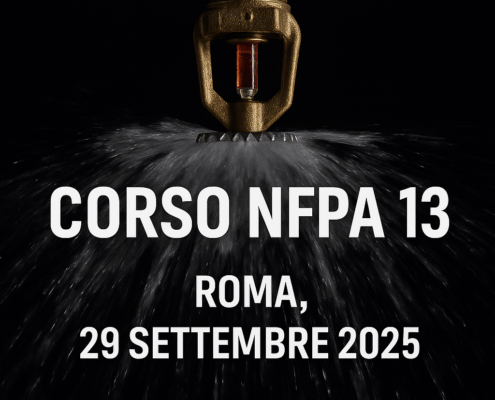
Redazione Continuitaly2025-07-16 00:23:072026-01-04 21:43:46NFPA 13 course in Rome: discover the intricacies of sprinkler systems
 https://www.continuitaly.it/wp-content/uploads/2025/07/ChatGPT-Image-27-apr-2025-11_12_21.png
1024
1024
Redazione Continuitaly
https://www.continuitaly.it/wp-content/uploads/2025/03/continuitaly_hd_transparent-300x69.png
Redazione Continuitaly2025-07-14 04:35:462025-07-14 04:35:46NFPA 13 course in Rome: the complexity behind the efficiency of sprinkler systems
 https://www.continuitaly.it/wp-content/uploads/2025/03/DALL·E-2025-03-17-10.54.02-A-modern-professional-illustration-showing-a-team-of-business-professionals-analyzing-organizational-processes-around-a-large-digital-dashboard-label.webp
1024
1024
Redazione Continuitaly
https://www.continuitaly.it/wp-content/uploads/2025/03/continuitaly_hd_transparent-300x69.png
Redazione Continuitaly2025-03-17 11:58:162026-01-04 22:04:05Why do a Business Impact Analysis (BIA) – even if you don’t want a full Business Continuity system